My First Specimen for MSU

Ctenuchidae

Response from MSU through Howard Russell

"Looks like a ctenuchid moth (Ctenuchidae)."


Send pictures at bugman@msu.edu(Note: Send only High quality pictures and don't miss-use)

Before you send, please go through Tips on submitting your specimens 

Thanks to hike team Indian Chat App by which i got to know about it.
Thanks to Howard Russell 

Openfire Chat Server Installation on Linux

openfire chat server (Default database)
Note: pre-requirements java (default openJdk)

on ubuntu
# wget http://download.igniterealtime.org/openfire/openfire_4.0.4_all.deb
# dpkg -i openfire_4.0.4_all.deb  or dpkg --force-all -i openfire_4.0.4_all.deb
# service openfire stop
# service openfire start

on centos
# wget http://download.igniterealtime.org/openfire/openfire-4.0.4-1.i386.rpm
# rpm -ivh openfire-4.0.4-1.i386.rpm
# service openfire stop
# service openfire start

open browser
Navigate to http://your-ip-address:9090
continue with installation process
domain: server ip address

after installation

user: admin password: which you have set for administrator account

2).
openfire chat server (External database)
Note: required database must be installed (here MySQL)

on ubuntu
# wget http://download.igniterealtime.org/openfire/openfire_4.0.4_all.deb
# dpkg -i openfire_4.0.4_all.deb  or dpkg --force-all -i openfire_4.0.4_all.deb
# mysql -u root -p
> create database openfire;
> exit
# cd /usr/share/openfire/resources/database
# cat openfire_mysql.sql | mysql -u root -p openfire;
# /etc/init.d/openfire restart
# service mysql restart

open browser
Navigate to http://your-ip-address:9090
continue installation, make sure you select external database
replace [your_host] with localhost and [database_name] with openfire

For custom Java like Oracle Jdk and Jre

Prefer installing Openfire from .tar.gz
download file using below link
https://www.igniterealtime.org/downloads/download-landing.jsp?file=openfire/openfire_4_0_4.tar.gz

# mv openfire_4_0_4.tar.gz /opt/
# cd /opt/
# tar -xvzf openfire_4_0_4.tar.gz
# cd openfire/conf/
# nano openfire.xml

Uncomment <network> tag and put your server’s ip address inside <interface></interface>.

# /opt/openfire/bin/openfire start

open browser
Navigate to http://your-ip-address:9090
continue with installation

Post Installation
Download client
Official Site

Reference: link

Oracle JDK installation on Ubuntu

Oracle JDK installation on ubuntu


# mkdir /opt/java

# cd /opt/java

# wget --no-check-certificate --no-cookies --header "Cookie: oraclelicense=accept-securebackup-cookie" http://download.oracle.com/otn-pub/java/jdk/8u112-b15/jdk-8u112-linux-x64.tar.gz
# wget --no-check-certificate --no-cookies --header "Cookie: oraclelicense=accept-securebackup-cookie" http://download.oracle.com/otn-pub/java/jdk/8u112-b15/jre-8u112-linux-x64.tar.gz

# tar -xvf jdk-8u112-linux-x64.tar.gz
# tar -xvf jre-8u112-linux-x64.tar.gz

# rm  jdk-8u112-linux-x64.tar.gz
# rm  jre-8u112-linux-x64.tar.gz

# nano /etc/profile
(Add below lines at the end of the file and save it)

JAVA_HOME=/opt/java/jdk1.8.0_112
JRE_HOME=$JAVA_HOME/jre
PATH=$PATH:$JAVA_HOME/bin:$JRE_HOME/bin
export JAVA_HOME
export JRE_HOME
export PATH

JRE_HOME=/opt/java/jre1.8.0_112
PATH=$PATH:$JRE_HOME/bin
export JRE_HOME
export PATH

# update-alternatives --install "/usr/bin/java" "java" /opt/java/jdk1.8.0_112/bin/java 100
# update-alternatives --install "/usr/bin/java" "java" /opt/java/jre1.8.0_112/bin/java 100

# update-alternatives --set java /opt/java/jdk1.8.0_112/bin/java
# update-alternatives --set java /opt/java/jre1.8.0_112/bin/java

# . /etc/profile

# java -version

Note: Make sure no other vendor java is installed on your system before you start installation.
(Use # java -version to check and  # apt-get purge "installed java" to remove)
Reference

Computer Chassis Values

Value
Description
1
Other
2
Unknown
3
Desktop
4
Low Profile Desktop
5
Pizza Box
6
Mini Tower
7
Tower
8
Portable
9
Laptop
10
Notebook
11
Hand Held
12
Docking Station
13
All in One
14
Sub Notebook
15
Space-Saving
16
Lunch Box
17
Main System Chassis
18
Expansion Chassis
19
Sub Chassis
20
Bus Expansion Chassis
21
Peripheral Chassis
22
Storage Chassis
23
Rack Mount Chassis
24
Sealed-Case PC
PowerShell Script to know your machine chassis type

$computer = $env:COMPUTERNAME
$namespace = "ROOT\CIMV2"
$classname = "Win32_SystemEnclosure"

Write-Output "====================================="
Write-Output "COMPUTER : $computer "
Write-Output "CLASS    : $classname "
Write-Output "====================================="

Get-WmiObject -Class $classname -ComputerName $computer -Namespace $namespace |
    Select-Object * -ExcludeProperty PSComputerName, Scope, Path, Options, ClassPath, Properties, SystemProperties, Qualifiers, Site, Container |
    Format-List -Property [a-z]*

Step 1: Open PowerShell 
Step 2: Paste the above script all at once (use Ctrl + v) and then press Enter
Step 3: Locate ChassisTypes and match it with the above table.

Reference:ChassisTypes

Reliance Jio LTE SIM Compatible Smartphones

Reliance Jio LTE SIM Compatible Smartphones

BrandMobile Model
AppleiPhone 6
AppleiPhone 6S
AppleiPhone 6S Plus
AppleiPhone SE
BlackberryPriv
CoolpadCoolpad Max
CoolpadMega 2.5D
CoolpadCoolpad Note 3
CoolpadCoolpad Note 3 Lite
GoogleNexus 5X
GoogleNexus 6
HuaweiHonor 5A
HuaweiHuawei Ascend D2
HuaweiHuawei Ascend P7
HuaweiHuawei Nexus 6P
HTCHTC Desire 524
HTCHTC Desire 526
HTCHTC Desire EYE
HTCHTC J Butterfly
InFocusInfocus M370
KarbonnKarbonn Quattro L45 IPS,
KarbonnKarbonn A71
LGLG G3
LGLG K7
LGLG X cam
LGLG Stylus 2
LGLG Spirit LTE
LGLG Stylo/ LG Stylus
LGLG Optimus Vu II
LGLG Optimus LTE III
LGLG Optimus LTE 2
LGLG Optimus GX
LGLG K7 LTE
LGLG K10 LTE
LGLG isai VL
LGNexus 5X
LGLG Google
LGLG G4
LGLG G3
LGLG G2
LGLG G Pro
LGLG G Flex 2
LGLG G Flex
LGLG G3 4G LTE 32GB
LGLG G4 Stylus 4G
LGLG Spirit 4G
LGLG X Cam
LGLG K520 - Stylus 2
LGLG K10
LeEcoLeEco Max 2
LeEcoLeEco Le 2 Pro
LenovoLenovo Z2 Pro
LenovoLenovo Vibe Shot
LenovoLenovo A6000 Plus
LumiaLeEco Max 2
LumiaLumia 640
LumiaLumia 640XL
LumiaLumia 735
LumiaLumia 830
LumiaLumia 950
LumiaLumia 950XL
MicromaxCanvas Sliver 5 (Q450)
MicromaxCanvas Mega 2 Q426
NextbitNextbit Robin
OnidaOnida I4G1
QiKUQiKU Q Terra
SonySony Xperia Z2 Tablet
SonySony Xperia Z3
SonySony Xperia Z3
SonySony Xperia Z4
SonySony Xperia Z4 Tablet
SonySony Xperia A4
SonySony Xperia M4 Aqua Dual
SonySony Xperia SP
SonySony Xperia Z2
VivoVivo Y21L
ZopoZopo Speed 8
ZTEZTE Blade S6
ZTEZTE Blade S6 Plus
This list is not the only list which support Jio LTE there may be other mobiles out in the market.So, comment below missed out list.
Reference : Reliance Jio

Computer Hack

Extend Evolution copy license by performing below steps

1. Windows Server 2012 R2
      Step 1: Run Command Prompt as Administrator
      Step 2: Type "slmgr.vbs /rearm" then press Enter (ignore quotations)
      Step 3: Restart
2. Windows Server 2008 R2
     Replace above command with "slmgr.vbs -rearm"
remaining steps are common
You can do this hack for 3 times

You can perform it on any windows version but check which one works for your version.

 For clear info on "slmgr" command refer http://www.tech-recipes.com/rx/2062/vista_activation_slmgr_command_options_explained/

http://www.windowsnetworking.com/articles-tutorials/windows-server-2008/Windows-Server-License-Manager-Script-slmgrvbs.html

Gravity

A beautiful demonstration of Earth's gravitational force.

According to Galileo, two bodies of different masses, dropped from the same height, will touch the floor at the same time in the absence of air resistance.

Bichagadu Telugu Movie


A strong HOPE can do anything. His hope for his mother life made him beggar for 48 days. I recommend you to watch this  good movie.

Game Of Riddles -The Hobbit

Gollum vs Bilbo
  1.  What has roots as nobody sees, is taller than trees. Up, up, up it goes and yet, never grows. Answer: The mountain.

  • Thirty white horses one a red hill. First they champ, then they stamp then they stand still.  Answer: Teeth

  • Voiceless, it cries. Wingless flutters. Toothless bites. Mouth-less mutters.  Answer: Wind

  • A boxes without hinges, key or lid. Yet golden treasure inside is hid.  Answer: Egg

  • All things it devours. Birds, beasts, trees, flowers. Gnaws iron, bites steel, grind hard stones to meal.  Answer: Time


Source:The Hobbit An Unexpected Journey http://www.imdb.com/title/tt0903624/

Word of the day

Supercalifragilisticexpialidiocious

  • One of the longest words in English

  • super- "above", cali- "beauty", fragilistic- "delicate", expiali- "to atone", and docious- "educable" roughly = "Atoning for educability through delicate beauty."

  • Commonly defined as "extraordinarily good" or "wonderful"

THE BAADER-MEINHOF PHENOMENON

THE BAADER-MEINHOF PHENOMENON
ARTICLE #136 – WRITTEN BY ALAN BELLOWS

You may have heard about Baader-Meinhof Phenomenon before. In fact, you probably learned about it for the first time very recently. If not, then you just might hear about it again very soon. Baader-Meinhof is the phenomenon where one happens upon some obscure piece of information—often an unfamiliar word or name—and soon afterwards encounters the same subject again, often repeatedly. Anytime the phrase “That’s so weird, I just heard about that the other day” would be appropriate, the utterer is hip-deep in Baader-Meinhof.

Most people seem to have experienced the phenomenon at least a few times in their lives, and many people encounter it with such regularity that they anticipate it upon the introduction of new information. But what is the underlying cause? Is there some hidden meaning behind Baader-Meinhof events?

The phenomenon bears some similarity to synchronicity, which is the experience of having a highly meaningful coincidence, such as having someone telephone you while you are thinking about them. Both phenomena invoke a feeling of mild surprise, and cause one to ponder the odds of such an intersection. Both smack of destiny, as though the events were supposed to occur in just that arrangement… as though we’re witnessing yet another domino tip over in a chain of dominoes beyond our reckoning.

Despite science’s cries that a world as complex as ours invites frequent coincidences, observation tells us that such an explanation is inadequate. Observation shows us that Baader-Meinhof strikes with blurring accuracy, and too frequently to be explained away so easily. But over the centuries, observation has also shown us that observation itself is highly flawed, and not to be trusted.

The reason for this is our brains’ prejudice towards patterns. Our brains are fantastic pattern recognition engines, a characteristic which is highly useful for learning, but it does cause the brain to lend excessive importance to unremarkable events. Considering how many words, names, and ideas a person is exposed to in any given day, it is unsurprising that we sometimes encounter the same information again within a short time. When that occasional intersection occurs, the brain promotes the information because the two instances make up the beginnings of a sequence. What we fail to notice is the hundreds or thousands of pieces of information which aren’t repeated, because they do not conform to an interesting pattern. This tendency to ignore the “uninteresting” data is an example of selective attention.

In point of fact, coincidences themselves are usually just an artifact of perception. We humans tend to underestimate the probability of coinciding events, so our expectations are at odds with reality. And non-coincidental events do not grab our attention with anywhere near the same intensity, because coincidences are patterns, and the brain actually stimulates us for successfully detecting patterns, hence their inflated value. In short, patterns are habit-forming.

But when we hear a word or name which we just learned the previous day, it often feels like more than a mere coincidence. This is because Baader-Meinhof is amplified by the recency effect, a cognitive bias that inflates the importance of recent stimuli or observations. This increases the chances of being more aware of the subject when we encounter it again in the near future.

How the phenomenon came to be known as “Baader-Meinhof” is uncertain. It seems likely that some individual learned of the existence of the historic German urban guerrilla group which went by that name, and then heard the name again soon afterwards. This plucky wordsmith may then have named the phenomenon after the very subject which triggered it. But it is certainly a mouthful; a shorter name might have more hope of penetrating the lexicon.

However it came to be known by such a name, it is clear that Baader-Meinhof is yet another charming fantasy whose magic is diluted by stick-in-the-mud science and its sinister cohort: facts. But if you’ve never heard of the phenomenon before, be sure to watch for it in the next few days… brain stimulation is nice.

Update: Independent reports indicate that the name “Baader-Meinhof phenomenon” was coined on a discussion thread on the St. Paul Pioneer Press in ~1995. Participants were discussing the sensation, and decrying the lack of a term for it, so someone asserted naming rights and called it “Baader-Meinhof Phenomenon” presumably based on their own experience hearing that moniker twice in close temporal proximity.

The more scientifically accepted name nowadays is “frequency illusion,” but Stanford linguistics professor Arnold Zwicky didn’t coin that term until 2006, over a decade after “Baader-Meinhof” was coined, and around the same time this article was originally written. So both terms are arguably valid.


YUM REPOSITORY #LINUX


Yum Repository

Steps to create yum repository
Example: CentOS 7
1)      Log in as root or superuser ($ prompt = Normal user; # prompt = Super user)
2)      # df
(df= disk free or disk file system)
3)      # cd media path/Packages
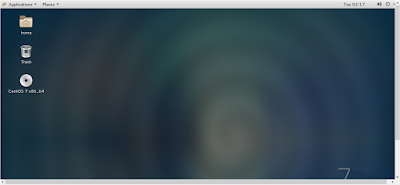
(cd=change directory; media path is the red box in the pic)


Note: Prefer to type the path while (cd) changing directory rather copy paste
4)      # rpm -ivh vsftpd*
(rpm=redhat package manager; vsftpd=very secure file transfer protocol daemon)
5)      # rpm -ivh delta*
6)      # rpm -ivh python-delta*
7)      # rpm -ivh createrepo*
(-ivh stands for install, verbose, hash; # man rpm (this gives you complete information about those options))
8)      # cd /
9)      # mkdir repo
(mkdir=make directory)
10)  # cp -rvf /media path/Packages /repo
(cp=copy; -rvf stands for recursive, verbose, force)


11)  # createrepo –database /repo/Packages

12)  # cp -rvf /media path/RPM-GPG-KEY-yourOS  /repo


13)  # vi /etc/yum.repos.d/basic.repo (vi=visual instrument- a text editor)

Press [i] to insert text

               [basic]
               name=my local repo
               enable=1
               baseurl=file:///repo/Packages
               gpgcheck=0
               gpgkey=file:///repo/ RPM-GPG-KEY-yourOS

               press [esc] then

               :wq (write&quit)


14)  # yum repolist
(Yum= yellowdog updater modifier)
15)  # cd /tmp
16)  # wget https://dl.fedoraproject.org/pub/epel/epel-release-latest-7.noarch.rpm
17)  # ls *.rpm
(ls=list)
18)  # yum install -y ‘above command output’
(-y stands for assume yes)
19)  #yum repolist

Pulling the tire off the dumper truck


Video was taken with Nokia Lumia 720 @SCCL (The Singareni Collieries Company Limited (A Government Company)), 
Godavarikhani, Telangana. 

Nokia Lumia 1020

Nokia Lumia 1020

Lumia 1020 (known as Lumia 909 during development) - A handy little DSLR camera phone with 41MP .

Unique features:
Image courtesy: https://wheelsandchips.files.wordpress.com/2014/11/nokiafinal-3-1.jpg
  • Massive camera with 6 lenses
    Image courtesy: http://www.slashgear.com/nokia-lumia-1020-pureview-official-41mp-windows-phone-8-11290042/


    • Xenon flash
    Other features like it supports Wireless charging and an exclusive accessory "Camera Grip"

    For complete details checkout link below

    https://en.wikipedia.org/wiki/Nokia_Lumia_1020

    Creative angle of me #KesariBabu

    Grinning Face & Winking Face #Capsicum 

    Trueloves #Orange

    Darlings 

    Export of VM from one ESXi to another using OVF tool on Windows

    OVF tool
    (Open Virtualization Format)

    VMware OVF Tool is a command-line utility that allows you to import and export OVF packages to and from many VMware products.

    ESXi-1 (source)                           ESXi-2 (target)
    PC

    Download OVF Tool using below link based on your requirement. That is OS on which your PC running Windows or Linux


    After Installation go to source ESXi server then turn off VM which we are exporting and remove CD/DVD drive and any USB

    (ESXi server--->VM--->edit settings--->remove)

    Then return to PC

    Here I take PC with windows OS
    Open command prompt and navigate to its absolute path

    (C:\Program Files\VMware\VMware OVF Tool)

    Then run the below command

    ovftool  -ds=datastore1  vi://root@192.168.0.14/RIMWIN12T01  vi://root@192.168.0.88

    The entire transfer process is carried out on PC with this single command
    (Feel free to replace “datastore1, 192.168.0.14/RIMWIN12T01, 192.168.0.88” with your values)
    Here
     “datastore1” is destination storage name
    “192.168.0.14” Source ESXi IP & 
    “RIMWIN12T01” VM (Virtual Machine) which we are transferring
    “192.168.0.88” target ESXi IP
    Here is the sample output where transfer completed with errors and completed successfully
    (Error because I dint remove CD/DVD drive)

    Have patience cause it’s a slow process

    Go to destination ESXi server and add required drives and Power on the Virtual Machine

    Note: check the names (like datastore, VM and IP addresses) twice before running command.


    *VM=Virtual Machine; IP=Internet Protocol; ESXi=Elastic Sky X